
Roanoke County Arrest Warrants Explained
Virginia Code § 19.2-72 sets two gates before an arrest warrant can issue: a sworn, oath-based examination and a finding of probable cause. A felony demands a written complaint. That holds even when the complainant is a law-enforcement officer. A felony complaint from someone outside law enforcement also needs prior approval stated on its face. In Roanoke County, a magistrate or another authorized court officer reviews the complaint and decides. If it passes, the warrant tells an officer to arrest the named or described person and bring them before a court with jurisdiction over the offense. From that point the case belongs to the proper local court.
Roanoke County Arrest Warrant Issuance
The process usually starts when a complainant or witness gives sworn information to an authorized officer. If the review supports probable cause, that officer may issue an arrest warrant. Roanoke County cases can begin with County Police, the Sheriff, Vinton Police, or another law-enforcement office, though the issuing officer and the court fix the legal route. Virginia law then requires the warrant to direct an appropriate officer, identify the accused, describe the offense, command an arrest and a court appearance, and carry the issuer's signature. County Police publishes a separate outstanding list as a PDF. That document is not the warrant itself, and it is not a full docket. Code of Virginia § 19.2-72 governs issuance and required contents. It is a rule for process, not a live Roanoke County warrant search, so treat the list as a starting point and the court as the authority.
Inside a Roanoke County Arrest Warrant
The statute spells out what an arrest warrant must contain, but the public County Police PDF shows only name, sex, age, and the warrant charge. OCIS can add the court, case number, charge, offense date, hearing date, and Code section for a case it covers. No public warrant-number format, bond field, or live status field exists for Roanoke County records. To confirm a Roanoke County warrant and its current conditions, ask the issuing clerk, the magistrate, or Police Warrants directly.
| Warrant number | No public Roanoke County format was found. |
|---|---|
| Accused | The warrant must name or reasonably describe the person. |
| Offense | The charge must be described with reasonable certainty. |
| Issuing officer | The warrant carries the issuing officer's signature and directs an appropriate officer. |
| Case and hearing | OCIS may show a case number and hearing date for covered matters. |
| Bond and status | Confirm terms with the magistrate or issuing court; the public PDF does not show them. |
Who Serves Arrest Warrants Locally
Virginia process may be served by County Police, a sheriff or deputy, a town officer so directed, or a jail officer acting on someone already held. The Roanoke County Police Warrants office is the public contact for its outstanding list. The Sheriff handles jail and court-security services and can execute process under state law. Federal or out-of-state matters can run through the U.S. Marshals Service with local partners. County Police reported a 2024 case in which U.S. Marshals helped locate a wanted person. That report confirms the partnership, not a public roster. The Western District U.S. Marshals office is based in Roanoke, close to Roanoke County itself.
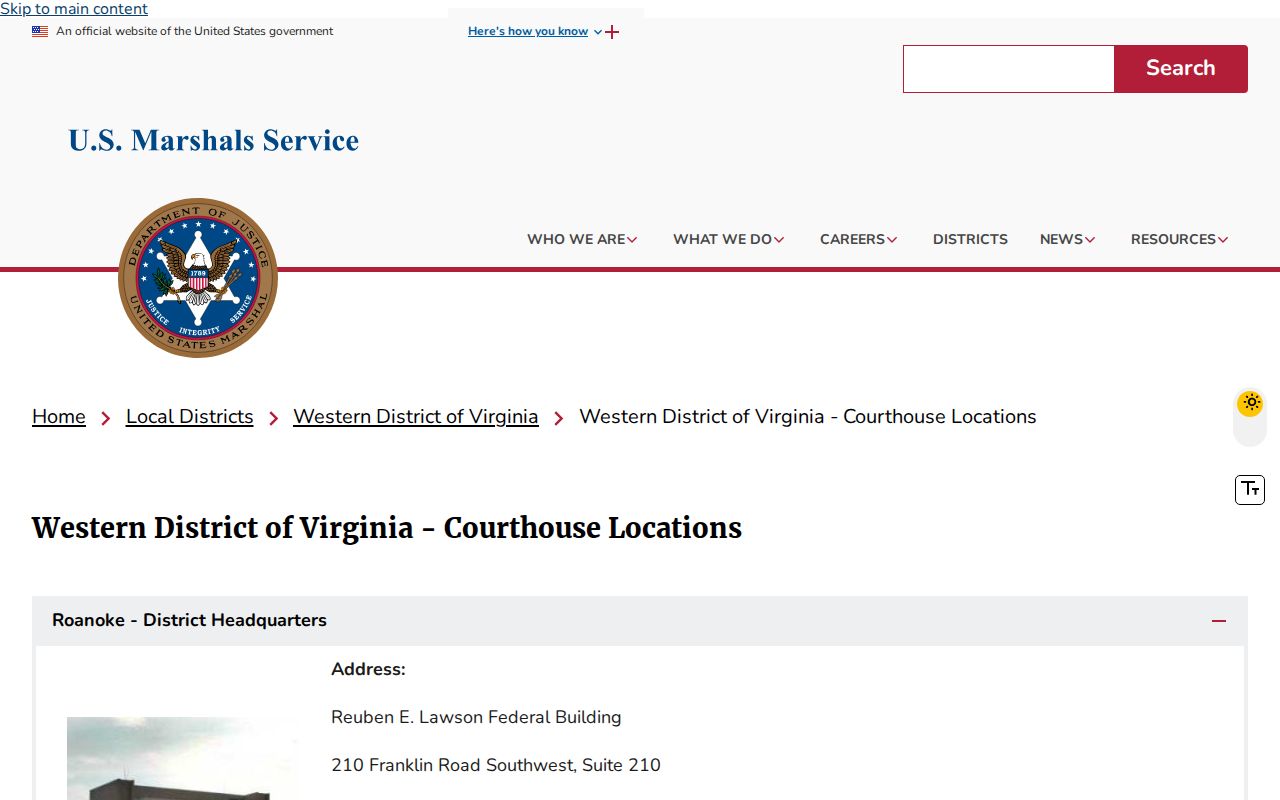
Federal docket records are separate from County Police and OCIS case information.
Serving Arrest Warrants in Roanoke County
Once a warrant is served, the officer records the execution and returns the process to a judicial officer. The person goes through booking and appears before a magistrate or judge, who sets release terms. County magistrate service sits at the Salem jail and generally runs around the clock. Posting bond does not dismiss the underlying charge. Circuit, GDC, or JDR keeps the Roanoke County case, depending on jurisdiction. Call the issuing clerk about the next court date, and call the Warrants office about the service-side record.
Arrest Warrant Service and Return
Code § 19.2-76 governs execution and return of arrest process. The officer endorses the execution date and returns the warrant to a judicial officer. That return is a court step, not a promise that every public list updates at once. Roanoke County's main public contacts sit at three locations: Police Warrants on Cove Road, the courts on East Main Street, and the Sheriff, jail, and magistrate at the Salem jail. Which one you need depends on your question: service, a court case, or custody and bail.
Comparing Arrest, Summons, and Bench Warrants
Three kinds of process get confused. An arrest warrant follows probable cause and commands an officer to take a person into custody. A summons directs someone to answer a charge without an immediate arrest. A bench or FTA warrant follows a missed court obligation in an existing case. Identify the paper by its exact wording and the issuing court. A Roanoke County court clerk can explain the docket, and the Police Warrants office can help confirm its list entry.
| Feature | Arrest Warrant | Summons | Bench Warrant |
|---|---|---|---|
| Purpose | Commands an arrest | Orders a response or appearance | Addresses a missed court duty |
| Basis | Sworn facts and probable cause | Charge where summons is allowed | Failure to appear or comply |
| Record route | Issuing officer and case clerk | Court named in the summons | Clerk for the existing case |
| Confirm | Bond and appearance terms | Response date and court | Capias, show cause, or recall steps |
Roanoke County Arrest Warrant or Circuit Capias
A probable-cause arrest warrant grows out of a sworn examination under § 19.2-72. A felony indictment can instead produce a Circuit capias under § 19.2-232. Both are arrest process, but the source and the court record differ. Ask Circuit Clerk W. Michael Galliher's office whether a Roanoke County case is an indictment, a new complaint, or another process. For misdemeanor or traffic matters, GDC Clerk Gretchen Preston's office is the more likely case route.
Federal Warrants Need a Separate Check
A Roanoke County warrant search stops at the county line. Federal warrants never show up in the County Police PDF or Virginia OCIS, since those tools cover local and state matters only. Federal cases belong to the U.S. District Court for the Western District of Virginia and the U.S. Marshals Service. PACER pulls up filed docket material. Still, a sealed warrant or a document left off the public docket can slip past it. PACER also charges for access, with a per-document cap and a quarterly fee waiver threshold listed on its official page. CourtListener's RECAP mirror is not an official record and cannot confirm a warrant. For any federal question, talk with counsel or the federal court itself.
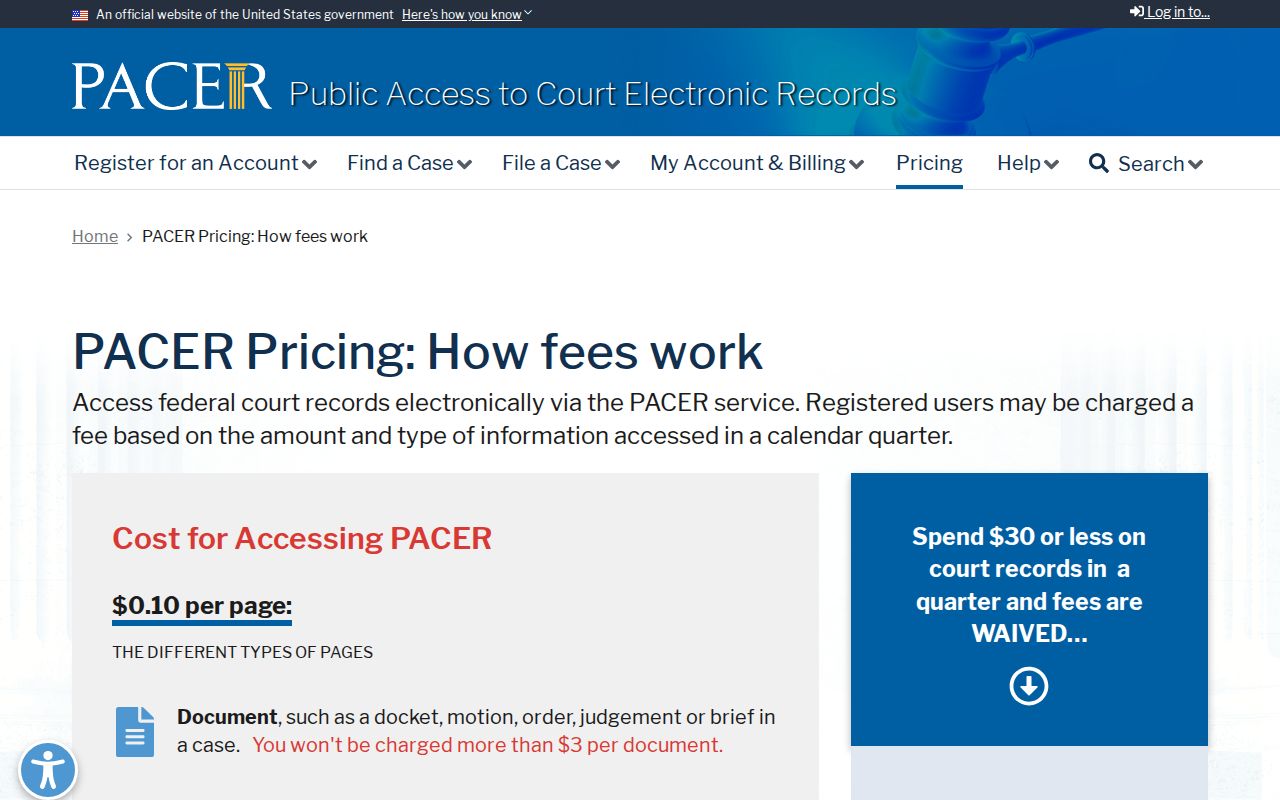
A federal docket search cannot confirm every active federal warrant.
Roanoke County Arrest Warrant Local Hand-Off
Roanoke County splits the arrest process from the court file, and knowing the split saves trips. A magistrate sits at the County jail, 401 E. Main Street in Salem, and generally answers warrant and bail questions around the clock. The courthouse at 305 E. Main Street houses the Circuit, GDC, and JDR clerks. Each clerk keeps the case records for its own court. Once a warrant is served, the officer makes a return to a judicial officer under Virginia procedure. So a person often needs two answers. Police explain the active warrant list; a clerk gives the next court date. County Police Warrants, at 5925 Cove Road, is separate from the Sheriff and the jail. Ask each Roanoke County office only for the part it handles. One caution: a case search may not show a fresh return right away. For urgent bail questions, call the magistrate at 540-387-6092. For a case-specific order or hearing, contact the issuing clerk.
Roanoke County Arrest Warrant Next Steps
Call before you drive anywhere. Reach Police Warrants and the court holding the charge first. Ask whether counsel can arrange an appearance, whether bond has been set, and where a person must report. A voluntary surrender can still end in custody. Roanoke County offers no local surrender window and no public warrant-recall form. Virginia permits secured and unsecured bond, but the magistrate or judge sets the conditions. An attorney can request a recall motion, an appearance, or bond. Keep the court order or receipt, then confirm the warrant record has changed.
Important: Talk with a lawyer and the issuing court before appearing; a warrant may lead to arrest or booking during a contact with law enforcement.